
Call 24/7 — we answer day or night. (516) 823-2123
Mold Removal in Inwood, NY 11096 — Mold Remediation & 24/7 Water Damage Help
Inwood Mold Solutions handles mold removal, mold remediation and water damage cleanup for homes and businesses in Inwood, NY 11096 and the surrounding Five Towns. Call any time, day or night, for same-day appointments and 24/7 emergency water damage response. We start every job by finding the water that’s feeding the mold — tide water, a hidden leak, or trapped humidity — because mold always follows moisture.
- Call 24/7
- Same-day response
- Mold & water damage only
- Local on Doughty Blvd
- No pressure, no obligation
We’re at 447 Doughty Blvd, in Inwood on Long Island’s South Shore (Town of Hempstead, Nassau County) — not Inwood in Upper Manhattan. We work here, and we know these streets flood.
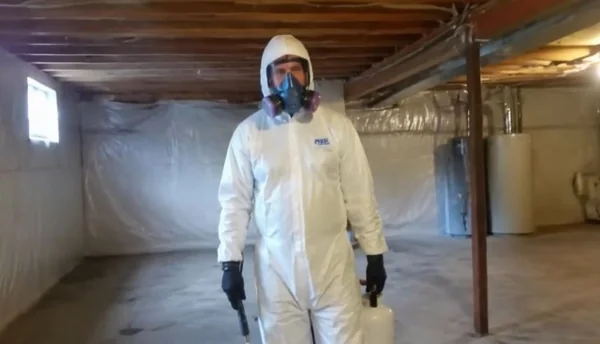
Every job starts with the water. Find it, stop it, then remove the mold — properly contained.
Fall Storm Season Is Here — Check Your Basement Now
Atlantic hurricane season runs through November 30, and nor’easters follow right behind it. In Inwood, storm surge rides on top of the regular high tides — which is how streets near Bayswater Boulevard and the Marina end up underwater. Once water gets into your home, you have roughly 24 to 48 hours to dry things out before mold can start growing.
- Wet drywall, carpet and insulation start the clock the moment water comes in
- Musty smells after a storm usually mean moisture is trapped somewhere you can’t see
- Acting in the first two days is the difference between drying out and tearing out
Why Mold Is Such a Common Problem in Inwood Homes
Inwood sits low on the water, bordered by Jamaica Bay, with creeks and basins running through the neighborhood. Add older houses and humid South Shore summers, and moisture has plenty of ways in.
High Tides, Full Moons and Streets That Flood
Some Inwood blocks flood even on dry days. Residents along Bayswater Boulevard, Davis Avenue, Chestnut, Maple and Walnut roads, and Peppe Drive have talked publicly about checking tide charts and moon phases because a full-moon high tide can put water in the street with no storm at all. The Town of Hempstead has planned road raising, check valves and drainage work for this area because the flooding keeps coming back.
Each time that water sits against a foundation, soaks a crawl space or backs up through a drain, it feeds mold. Motts Basin, Motts Creek, Doxey Brook and Head of Bay Lagoon are all part of the same drainage picture.
Hurricane Sandy Left Hidden Moisture Behind
During Sandy in October 2012, the USGS tide gauge on Jamaica Bay at Inwood recorded a record water level above FEMA’s 100-year flood elevation, and the National Weather Service listed Inwood among the South Shore communities with major residential damage. Many homes were pumped out but never professionally dried — wall cavities, framing and subfloors can still hide old moisture damage.
Storms Keep Testing Nassau County Basements
- September 2023: Some parts of Long Island got up to 9 inches of rain. Basements flooded across Nassau, and cars stalled in floodwater in nearby Woodmere.
- July 2025: Nassau County warned of possible rainfall rates of 2–3 inches per hour.
- July 2026: Nassau County and the Town of Hempstead declared states of emergency ahead of flooding storms.
Nassau County has also named low-lying parts of Inwood, Lawrence, Cedarhurst, Hewlett, North Woodmere and Woodmere as especially flood-prone after major storms.
Older Houses, Finished Basements and Tight Crawl Spaces
Many Inwood homes date back to the 1910s and 1920s, especially around the Marina and Bayswater Boulevard. Others are hi-ranches and raised ranches with finished lower levels. Common weak spots:
- Finished basements and lower-level dens built over slabs that sweat in summer
- Crawl spaces without a proper vapor barrier
- Old plumbing inside walls
- Bathroom fans never vented outside — or vented into the attic
- Attics with blocked soffit vents or ice-dam leaks in winter
Humid Summers Do the Rest
The EPA recommends keeping indoor humidity below 60% — ideally between 30% and 50%. A closed-up Inwood basement in July can easily stay above that, even without a leak.
How fast can mold grow after a flood in Inwood?
Mold can begin growing on wet materials within 24 to 48 hours. That’s why the EPA advises drying wet building materials and furnishings within that window.
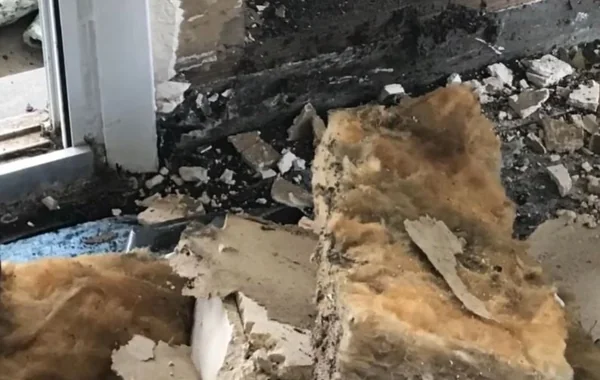
Flood-soaked drywall and insulation usually can’t be saved — they’re cut out and bagged, then the framing is cleaned and dried.
Why Inwood Calls a Mold Specialist — Not a General Contractor
Most companies list mold as one of twenty services. We focus on mold and water damage only — finding moisture, stopping it, and removing mold properly. On the South Shore, where tide water, storm surge and humidity all hit the same houses, that focus matters.
What to Expect: Us vs. a Typical Mold Company
| Typical mold company | Inwood Mold Solutions | |
|---|---|---|
| Availability | Business hours, callback later | Calls answered 24/7, same-day response |
| Finds the moisture source | Often skipped | First step, every time |
| Assessment kept separate from removal | Sometimes “we test and remove” | Independent assessor, as NY requires |
| Containment & negative air | Plastic sheet — or none | Sealed and under negative pressure |
| Porous materials | Sprayed and painted over | Removed and bagged |
| Proof it worked | “Looks clean” | Independent clearance testing |
| Knows Inwood’s tides & flood history | Generic Long Island copy | Local, street by street |
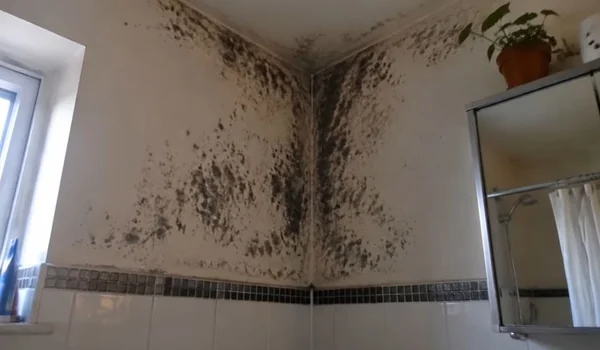
Is it mold or efflorescence on my basement wall?
White, crystal-like deposits that crumble to powder are usually efflorescence — mineral salts left behind as water moves through masonry. Fuzzy, spreading or discolored growth is more likely mold. Either way, water is getting through the wall.
Signs You Might Have Mold
| What you notice | What it often means | What to do |
|---|---|---|
| Musty, earthy smell in the basement or a closet | Mold behind drywall, under flooring or in a wall cavity | Get it checked — the smell has a source |
| Dark spots that come back after cleaning | Moisture is still feeding it | Find the water source before cleaning again |
| Peeling or bubbling paint | Moisture trapped behind the surface | Look for a leak or condensation |
| White, powdery streaks on basement walls | Often efflorescence — water is moving through the foundation | Watch for mold nearby; fix the water entry |
| Water stains on a ceiling | Past or active roof, pipe or bathroom leak | Open and inspect before painting over |
| Allergy-like symptoms that ease when you leave home | Possible indoor mold exposure | Talk to your doctor, and have the home looked at |
| Mushrooms or fuzzy growth in carpet | Carpet or pad that never fully dried | The carpet and pad usually need to go |
| Wet basement after a high tide or storm | Mold can start within 24–48 hours | Dry immediately and document everything |
Not sure what you’re looking at? Take a photo and call us any time.
Our Mold Removal & Remediation Services in Inwood
Mold Remediation by Area of the Home
Mold Remediation
The full process — finding the moisture source, containment, removing contaminated materials, cleaning, drying and independent clearance testing.
Black Mold Removal
Dark mold isn’t automatically “toxic black mold.” Several common molds look black. What matters is how far it has spread and what’s feeding it.
Basement Mold Removal
Our most common call in Inwood: finished basements, block walls, lower-level dens and stored belongings after tide flooding or summer humidity.
Crawl Space Mold Removal
Damp crawl spaces under older homes and raised ranches, including vapor-barrier and moisture control.
Attic Mold Removal
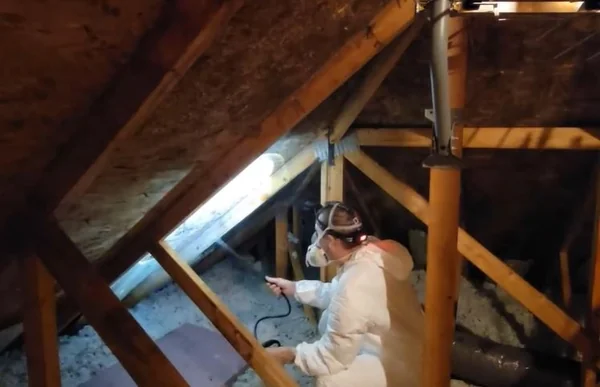
Mold on roof sheathing from poor ventilation, blocked soffits, bath fans venting into the attic, and ice dams.
Bathroom Mold Removal
Leaks behind tile, ceilings above showers, and fans that don’t actually move air outside.
Kitchen Mold Removal
Under-sink leaks, dishwasher and refrigerator lines, and swollen particleboard cabinets.
Water & Flood Damage — 24/7 Emergency Response
Water Damage Mold Restoration
Burst pipes, water heater failures and appliance leaks — fast drying so a water problem doesn’t become a mold problem.
Flood Mold Cleanup
High-tide flooding, storm surge and sewer backups — day or night. Floodwater can carry sewage, so soaked drywall, insulation and carpet are usually removed, not cleaned.
Testing, Air & Commercial
Mold Assessment & Testing
We coordinate with independent, state-licensed mold assessors who inspect, sample, write the remediation plan and return for clearance testing.
HVAC & Duct Mold
Musty air from vents, AC drain pans and ductwork — and an honest answer when duct cleaning isn’t what you need.
Commercial Mold Remediation
Storefronts and restaurants on Rockaway Turnpike, units off Inip Drive, multifamily buildings and community spaces. After-hours work available so you can stay open.
September 2026 update
Summer storms and humidity leave many South Shore basements damp going into fall. If your basement smelled musty in August, get it checked before the heat comes on and closes the house up for winter. We answer 24/7: (516) 823-2123
Water Got In? What to Do in the First 48 Hours
The EPA advises drying wet materials within 24 to 48 hours to prevent mold. After a high tide, storm or burst pipe in Inwood:
- Stay safe first. Keep out of standing water near outlets or appliances. Treat floodwater from outside or a sewer backup as contaminated.
- Stop the water if you can — shut the supply valve or clear the drain.
- Take photos and video of everything before moving or discarding anything. Your insurance claim depends on it.
- Remove standing water and get wet rugs, cushions and boxes out of the space.
- Start drying — fans, dehumidifiers, and open windows if the outside air is drier.
- Don’t paint over, caulk over or close up wet walls.
- Call us — any hour — so we can check what’s still wet inside walls and floors.
Flood insurance and mold
If you have flood insurance, act fast. FEMA says the National Flood Insurance Program won’t cover mold damage if the policyholder didn’t take reasonable steps to prevent it — unless officials banned entry to the area or floodwater kept you from reaching the home.
Water just came in?
We respond the same day.
How Our Mold Remediation Process Works
No scare tactics and no surprises. Here’s what happens after you call.
1
A quick call (about 5 minutes)
Tell us what you’re seeing and where. We’ll ask when you first noticed it, whether water came in recently (tide, storm, pipe or appliance), whether anyone in the home has asthma, a newborn or a pregnancy, and whether you rent or own. If you can, text us a photo. Before we hang up, you’ll know whether this sounds like a small DIY fix or something that needs a professional.
2
Same-day visit to find the moisture source
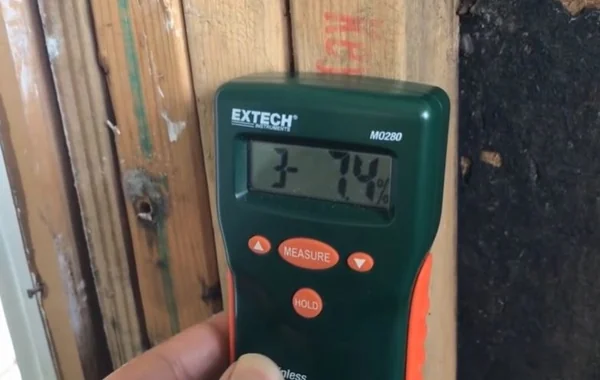
We check the affected area, trace where the water is coming from, and measure moisture in walls, floors and framing.
3
Independent assessment and a written plan
For mold covering more than 10 square feet, New York requires a licensed mold assessor to inspect and write a Mold Remediation Plan before work starts. The assessor must be a separate company from the one doing the removal — that separation protects you.
4
Containment
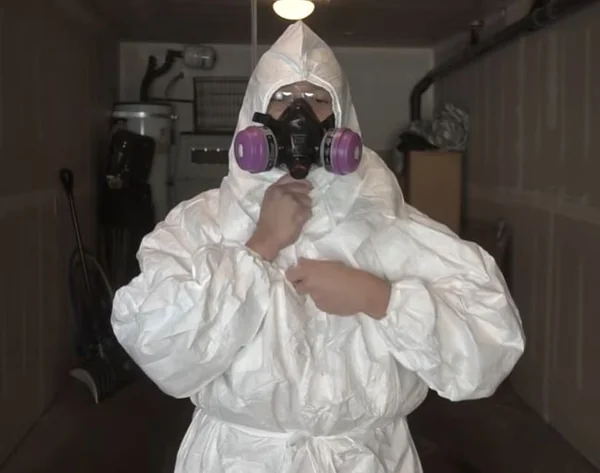
The work area is sealed with plastic sheeting and put under negative air pressure with HEPA air scrubbers, so air flows into the work zone — not out into your home.
5
Removal and cleaning
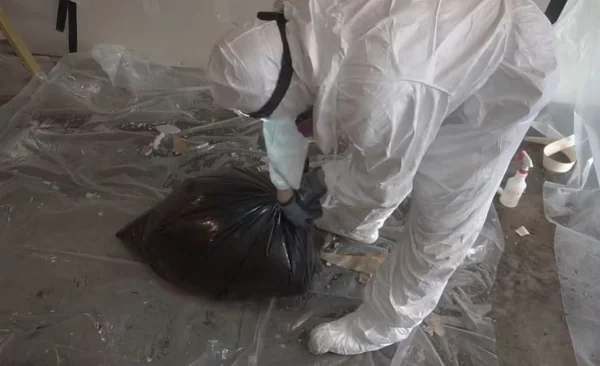
Moldy porous materials like drywall, insulation and carpet pad are cut out and bagged. Framing and salvageable surfaces are cleaned and HEPA-vacuumed.
6
Drying
The area is dried to normal moisture levels before anything is closed back up.
7
Independent clearance testing
The assessor returns to confirm the work is complete. You get the paperwork — for your records, your insurer, or a future buyer.
8
Keeping it from coming back
We go over what caused it — grading, gutters, a sump, a vapor barrier, a bath fan or dehumidification. The industry standard for mold remediation (ANSI/IICRC S520, updated in 2024) is clear that fixing the moisture source is essential.
We plan around the tide
In parts of Inwood, a full-moon high tide can put water across the street and block access. When we schedule work near Bayswater Boulevard, the Marina or other low-lying blocks, we check tide times first — so crews and equipment get in and out, and drying equipment isn’t set up right before the next flood tide.
When Mold Hits Inwood Homes — A Seasonal Guide
Fall (September–November)
Hurricane and nor’easter season. Storm surge plus high tides flood low streets; basements and crawl spaces take on water.
Winter (December–February)
Frozen and burst pipes, ice-dam roof leaks, and window condensation in closed-up homes.
Spring (March–May)
Snowmelt and rain push groundwater into foundations. Homebuying season brings mold flags on inspection reports.
Summer (June–August)
Peak humidity. Musty basements and mold on stored boxes — even with no leak at all.
New York Mold Law: What Inwood Homeowners Should Know
- Over 10 square feet? Licensed professionals required. If you hire someone for mold larger than 10 square feet, New York Labor Law Article 32 requires a licensed Mold Assessor and a licensed Mold Remediation Contractor.
- Two separate companies. The assessor on your project can’t also be the remediator.
- Homeowners can do their own work. New York doesn’t require you to hire anyone to clean mold in your own home.
- Check the license. The NYS Department of Labor has an online search tool for licensed mold contractors.
- Nassau County licensing too. The county’s Department of Consumer Affairs licenses environmental hazard remediation providers and home improvement contractors — ask any company for their Nassau license.
Can I Remove Mold Myself?
Often, yes — if the area is small (under about 10 square feet), it’s on a hard, non-porous surface like tile or glass, and you’ve fixed the moisture problem.
- Wear gloves, eye protection and an N95 respirator.
- Scrub hard surfaces with detergent and water, then dry them completely.
- Never mix bleach with ammonia — the fumes are toxic.
- Porous materials like drywall, ceiling tiles and carpet usually can’t be fully cleaned and need replacing.
If it keeps coming back, covers a larger area, or showed up after flooding, call us.
Is Black Mold Dangerous?
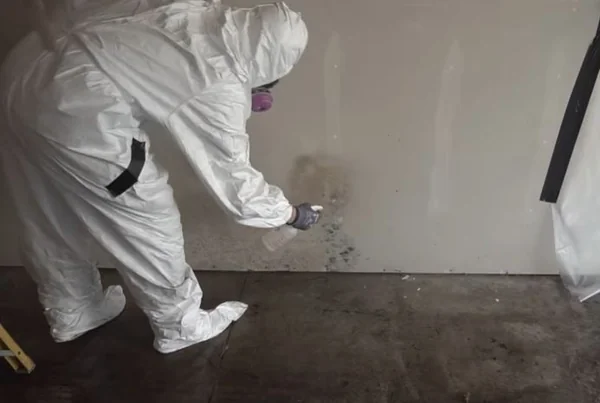
Color alone doesn’t tell you much. Several common indoor molds are dark, and they all grow for the same reason: moisture.
According to the CDC, mold exposure can cause a stuffy nose, sore throat, coughing, wheezing, burning eyes or a skin rash in some people. People with asthma, mold allergies, weakened immune systems or chronic lung disease are more sensitive. If symptoms improve when you’re away from home, talk to your doctor — and have the home checked.
We won’t scare you. Most household mold problems are fixable once the water problem is solved.
Does Insurance Cover Mold Removal?
It depends on what caused the mold, not what color it is.
Homeowners insurance
Mold is generally covered when it results from a sudden, accidental event — like a burst pipe or failed washing machine hose — reported promptly. Mold from long-term leaks, humidity, neglect or outside flooding is generally excluded, and many policies cap mold coverage.
Flood insurance (NFIP)
Standard homeowners policies don’t cover outside flooding, including tide or storm surge. With an NFIP flood policy, you’re expected to take reasonable steps to prevent mold after a flood. Photos, dates and drying records matter.
We document what we find so you have something solid to show your adjuster.
Landlords, Property Managers & Home Sales — We Work to Your Deadline
About half of Inwood households rent, and mold between units or in basement apartments is a common source of disputes.
- Tenant complaints handled fast — same-day response and a clear scope you can share with your tenant.
- Leaks between units traced — whether the source is the unit above, the roof or the foundation.
- Documentation for your file — photos, moisture readings and independent clearance paperwork.
- Closings kept on track — when an inspection flags mold, we outline the fastest documented path for buyers, sellers and agents.
- Access without you on site — lockbox, super or tenant contact; we coordinate.
Renters: New York’s warranty of habitability (Real Property Law §235-b) requires landlords to keep rentals fit to live in, and tenants can’t waive it in a lease. Report the problem in writing, keep photos and dates, and talk to a tenant attorney before withholding rent.
What Affects the Cost of Mold Removal in Inwood?
Every mold job is different, so we don’t quote over a web page. What drives the cost:
- Size of the affected area — small (under 10 sq ft), medium, or large (over 100 sq ft)
- Materials — tile cleans up; drywall, insulation and carpet get replaced
- Location — open basements are simpler than crawl spaces, attics or wall cavities
- Water type — a clean pipe leak is different from floodwater or a sewer backup
- Containment and drying needed
- Independent assessment and clearance testing — required on larger jobs
- Fixing the moisture source — the part that keeps you from paying twice
Call, describe what you’re seeing, and we’ll explain what your situation likely involves.
How to Choose a Mold Remediation Company
Ask any company:
- Is the assessor a separate, licensed company from the remediator?
- Will the work area be contained under negative air pressure?
- Do they find and fix the moisture source — or just spray and wipe?
- Is there a written scope before work begins?
- Is independent clearance testing part of the plan?
- Do they have a real local address and answer the phone — day or night?
Red flags to avoid
- “We’ll just spray it with bleach and paint over it”
- No plastic containment, especially with kids or pets at home
- Workers who don’t match the person who gave the quote
- Pressure to sign the same day
- “Our secret spray kills 100% of mold forever”
Mold Removal Near Inwood — Areas We Serve
From our base at 447 Doughty Blvd, we serve Inwood and the surrounding South Shore, and our phone is answered 24/7 — from the blocks near Inwood Park at the end of Bayview Avenue, the Marina section off Bayswater Boulevard, and the Country Club section near Inwood Country Club and Jamaica Bay, to the Doughty Boulevard corridor by the Inwood LIRR station and businesses along Rockaway Turnpike and Inip Drive.
Inwood 11096
Marina section raised ranches, Country Club hi-ranches, tide-prone streets off Bayswater Blvd.
Lawrence 11559
Low-lying areas named in Nassau County’s flood list, and village drainage upgrades.
Woodmere 11598
Cars stalled in floodwater during the September 2023 storm; many finished basements.
Cedarhurst 11516
Low-lying streets named by Nassau County as flood-prone after major storms.
Hewlett 11557
Including Hewlett Harbor, Hewlett Neck and Woodsburgh.
North Woodmere 11581
Named in the county’s list of flood-prone low-lying areas.
Far Rockaway 11691
Including Bayswater — right across the Queens line. NYC rental rules apply.
Island Park 11558
Listed by the National Weather Service for major residential damage in Sandy.
Long Beach 11561
Barrier island between the ocean and the bay.
Atlantic Beach 11509
Barrier beach community just across the bridge from Lawrence.
Also serving Valley Stream, Oceanside, East Rockaway, Lynbrook, Rosedale and communities across the Five Towns, Nassau County and Queens.
About Inwood Mold Solutions
We’re a local mold and water damage company on Doughty Boulevard, working for the people of Inwood and the Five Towns, with a phone line that’s answered around the clock. We see the same problems over and over — tide water, Sandy-era moisture, finished basements that sweat, and homeowners burned by companies that sprayed, painted and left.
So we do it differently. We pick up the phone at any hour, we listen, we tell you the truth about what you need, and we fix the reason the mold showed up in the first place.
Inwood Mold Solutions connects Inwood and South Shore homeowners with licensed, insured mold and water damage professionals who perform the on-site work.
Every Day It Stays Wet, It Gets Harder to Fix
24–48 hours
Mold can start on wet drywall, carpet and wood.
Weeks
It spreads into wall cavities, insulation and framing — turning a small cleanup into demolition.
Insurance
Flood policies expect you to take reasonable steps to prevent mold. Waiting can put your claim at risk.
Frequently Asked Questions About Mold Removal in Inwood, NY
Seeing Mold or Dealing with Water? Let’s Talk — Day or Night.
You don’t need to know what kind of mold it is or what the job involves. That’s our part. Just tell us what you’re seeing.
Inwood Mold Solutions
447 Doughty Blvd, Inwood, NY 11096
Phone: (516) 823-2123
Email: Contact@moldremovalininwood.com
Phone answered 24/7
24/7 emergency water damage response
Same-day appointments available
Sources
- U.S. EPA — A Brief Guide to Mold, Moisture and Your Home; Ten Things You Should Know About Mold
- CDC — Mold and health information
- NYS Department of Labor — Mold Program & Article 32 fact sheet
- Nassau County Department of Consumer Affairs — Licensing & Registrations
- FEMA — After the Flood: What Flood Insurance Policyholders Need to Know
- USGS — Hurricane Sandy New York storm-tide data
- National Weather Service (Upton, NY) — Southern Nassau coastal flood impacts
- ANSI/IICRC S520-2024 — Standard for Professional Mold Remediation
- NY Real Property Law §235-b — Warranty of habitability
Last updated: September 2026