

Call 24/7, we answer day or night. (516) 823-2123
Our Mold Remediation Process in Inwood, NY: 8 Steps From First Call to Clearance
Mold remediation in Inwood follows eight steps: a short phone call, a same-day visit to find the moisture source, an independent assessment and written plan, containment, removal and cleaning, drying, independent clearance testing, and a plan to keep the water out. No step gets skipped, because each one is what keeps the mold from coming back.
This is how every job runs at Inwood Mold Solutions, from a small bathroom ceiling to a flooded basement near Bayswater Boulevard. Want the service overview instead? See mold remediation in Inwood, NY.
- Call 24/7
- Same-day appointments
- Independent clearance
- No scare tactics
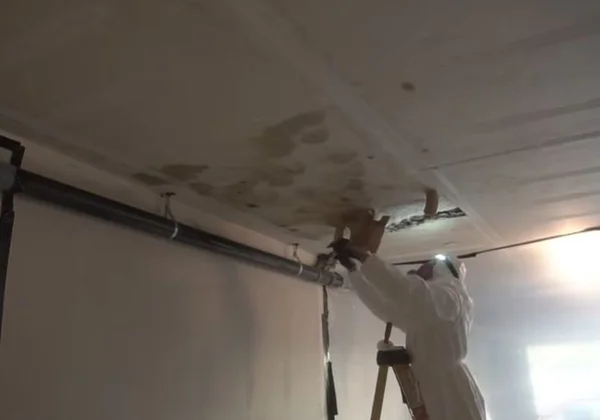
How Mold Remediation Works, Step by Step
Here’s exactly what happens after you call, what we’re checking at each stage, and why it matters in a low-lying, older town like Inwood.
A quick call to understand the problem
Day you call · about 5 minutes · any hour
Every job starts on the phone. You tell us what you’re seeing, and we ask the questions that decide what happens next:
- Where is it, and how big does it look: a hand-sized spot or a whole wall?
- Did water come in recently: a high tide, a storm, a pipe, an appliance or a sewer backup?
- Is there a musty smell with nothing visible?
- Does anyone in the home have asthma, a newborn, a pregnancy or a weakened immune system?
- Do you own the home or rent it?
If you can, text us a photo. Before we hang up you’ll know whether it sounds like a small spot you can clean yourself or something that needs a professional. If water is actively coming in, we walk you through the first steps right then.
A same-day visit to find the moisture source
Same day when available
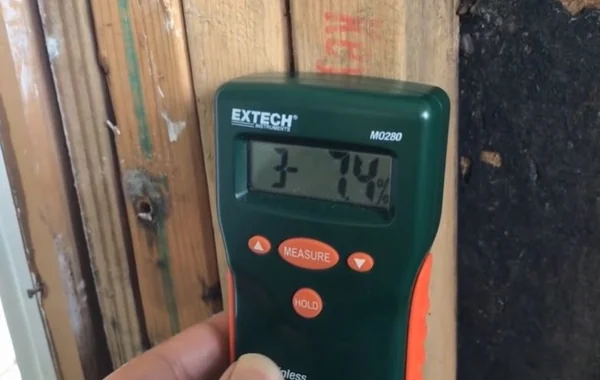
Mold is the symptom. Water is the cause. On the visit we look at the affected area, trace where the water is coming from, and take moisture readings in walls, floors and framing, including spots that look dry but aren’t.
Where the water usually comes from in Inwood
| Moisture source | Typical signs | Where we see it |
|---|---|---|
| Tide and storm-surge seepage | Damp lower walls, white mineral streaks, musty smell after high tides | Low-lying blocks near Bayswater Blvd and the Marina section |
| Storm drain or sewer backup | Water from floor drains, sewage odor | Basements on low streets during heavy rain |
| Plumbing leak | Stains, soft drywall, mold near bathrooms and kitchens | Any home, especially older plumbing |
| Condensation and humidity | Musty basement in summer, damp slab, mold on stored boxes | Finished basements and hi-ranch lower levels |
| Roof leak or ice dam | Stained attic sheathing, ceiling spots | Older roofs, mostly in winter |
| Bath fan venting into the attic | Mold on roof boards above a bathroom | Homes where the fan was never ducted outside |
An independent assessment and a written plan
Before any work starts
For mold covering more than 10 square feet, New York Labor Law Article 32 requires a licensed mold assessor to inspect the property and write a Mold Remediation Plan, and that assessor can’t be the company that does the removal. We coordinate with an independent assessor so the plan isn’t written by someone selling the work. Here’s how New York’s mold law works.
What the plan spells out
- The rooms and areas to be worked on, and roughly how much material is involved
- The cleaning and removal methods, and the protective equipment required
- The type of containment
- The clearance criteria the job has to meet
- The moisture source and what kind of contractor is needed to fix it
How big is the job? Mold work is generally grouped by size: small (under 10 square feet), medium (under 100 square feet) and large (over 100 square feet). The bigger the area, the more containment and oversight it needs. Learn more about mold assessment and testing.
Containment so spores stay in the work area
First thing on the work day
Before anything is cut or scrubbed, the work area is sealed off with plastic sheeting and put under negative air pressure using HEPA air scrubbers. Air flows into the work zone, not out into your hallways, bedrooms or ductwork.
- Doorways and openings sealed with plastic
- Heating and cooling to the area shut off and vents covered
- Crew in protective suits, gloves and respirators
- Walkways protected so debris isn’t tracked through the house
Red flag: a crew that starts tearing out moldy drywall with no plastic and no air scrubber. That’s how spores end up in the rest of the home.
Removal and cleaning, not spray and paint
Inside the containment
Moldy porous materials such as drywall, insulation, ceiling tiles and carpet pad usually can’t be fully cleaned, so they’re cut out past the visible damage, bagged inside the containment and removed. Framing and other solid surfaces are scrubbed, HEPA-vacuumed and wiped down.
Why spraying alone isn’t enough
The EPA notes that dead mold can still cause allergic reactions, which is why the goal is removal, not just killing it. A product sprayed over drywall or wood doesn’t take the growth out, and it doesn’t stop the water that caused it.
When floodwater is involved
Water from outside flooding or a sewer backup is treated as grossly contaminated (Category 3 under IICRC water damage standards). Soaked drywall, insulation and carpet are removed rather than dried in place.
Drying to normal moisture levels
Until readings say it’s dry
Dehumidifiers and air movers run until framing and remaining materials measure dry. Nothing gets closed up early. A wall that’s rebuilt over wet studs is the most common reason mold shows up again a few months later.
Near low-lying streets we check the tide table so drying equipment isn’t set up right before the next flood tide.
Independent clearance testing
After cleaning and drying
The independent assessor comes back to confirm the remediation met the plan. That can include a visual inspection, moisture readings and sampling, depending on what the assessor decides the job needs. You get the written results for your records, your insurance company or a future buyer.
A plan to keep the water out
Before close-out
The ANSI/IICRC S520 mold remediation standard (updated in 2024) is clear that the underlying moisture problem has to be fixed. Before we close out, we go over exactly what caused it and what will stop it from happening again:
- Grading, gutters and downspouts that send water toward the foundation
- Sump pumps, check valves and floor drains
- Vapor barriers in crawl spaces
- Bath fans ducted outside, not into the attic
- Dehumidification for basements that sit above 60% humidity
You also get a documentation packet with photos, moisture readings and clearance paperwork, which matters if you file a claim. Here’s when homeowners insurance covers mold in New York.
What Happens When Mold Remediation Steps Get Skipped
Most “the mold came back” stories trace back to one of these shortcuts.
No moisture source found
The mold is cleaned, but the tide seepage, leak or humidity is still there. It grows back, usually by the next humid season.
Same company tests and removes
Nobody independent decides how much work is needed or whether it’s done. That’s the conflict New York’s two-license rule exists to prevent.
No containment
Cutting moldy drywall without plastic and negative air spreads spores into other rooms and the HVAC system.
Spray and paint
Growth inside drywall, insulation and wood stays put under the paint, and the musty smell comes back.
Walls closed up wet
New drywall over damp studs traps moisture right back in the cavity. The fix has to be done again.
No clearance test
You have no proof the job worked, nothing solid for an insurer, and nothing to show a buyer later.
Proper Mold Remediation vs. the Shortcut
| Spray-and-paint shortcut | Our process | |
|---|---|---|
| Moisture source | Not checked | Found and addressed first |
| Who writes the plan | The company doing the work | An independent licensed assessor |
| Containment | None, or a sheet over the doorway | Sealed, negative air, HEPA scrubbers |
| Moldy drywall and insulation | Sprayed and painted over | Cut out, bagged and removed |
| Drying | Closed up the same day | Measured dry before rebuild |
| Proof | “Looks clean” | Independent clearance results |
Comparing quotes? Use our checklist on how to choose a mold remediation company.
How the Process Changes for Inwood Homes
The eight steps never change, but Inwood’s conditions shape how each one is done.
Flooding and tide water
Some streets near Bayswater Boulevard, Davis Avenue, Chestnut, Maple and Walnut roads and Peppe Drive have flooded at full-moon high tides with no storm at all. After that kind of flooding, the EPA’s 24 to 48 hour drying window is the clock everything runs on. See our flood mold cleanup service.
Sandy-era framing
During Hurricane Sandy in 2012, the USGS gauge on Jamaica Bay at Inwood recorded a record water level above FEMA’s 100-year flood elevation. When we open walls in homes that went through Sandy, we check the framing and subfloor closely for old water damage.
Older homes and finished lower levels
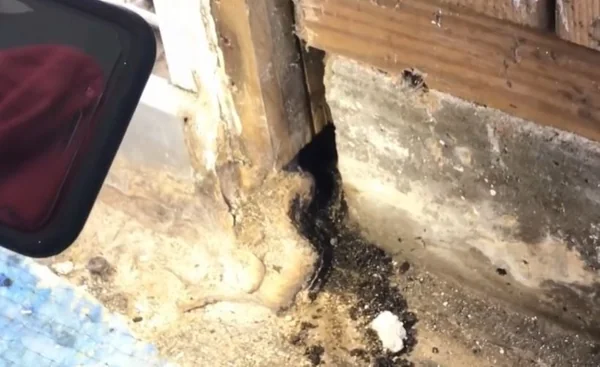
Many Inwood houses date to the 1910s and 1920s, with stone or block foundations that wick moisture. Hi-ranches and raised ranches often have finished lower levels built close to grade. Both change where we look first and how much we may need to open up.
Is it safe to stay home during mold remediation?
For most smaller, properly contained jobs, yes. The work area is sealed and under negative pressure, so spores stay inside the containment.
For larger projects, or if someone at home has asthma, a weakened immune system, a newborn or a pregnancy, staying elsewhere during the work can make sense. Ask your doctor if you’re unsure.
Before your appointment
- Don’t scrub, sand or disturb the mold
- Turn off fans blowing across the area
- Take photos of the damage and any water marks
- Clear a path to the area and move valuables out if you can
- Keep kids and pets out of the space
How Long Does Mold Remediation Take?
Small, contained jobs can be quick. Larger projects take longer because containment, removal, drying and clearance testing each take time, and drying can’t be rushed. We’ll give you a realistic timeline once we’ve seen the job. What affects it most:
- Size of the affected area and how many rooms are involved
- Materials: tile cleans up quickly; drywall, insulation and carpet need removal
- Location: open basements are faster than crawl spaces, attics or wall cavities
- Water type: a clean pipe leak versus floodwater or a sewer backup
- Drying time for framing and subfloors
- Assessor scheduling for the plan and the clearance test
Mold Remediation Process FAQ
What are the steps of mold remediation?
Eight steps: a phone call, a visit to find the moisture source, an independent assessment and written plan, containment, removal and cleaning, drying, independent clearance testing, and a plan to keep the water out.
Do I need a mold test before remediation?
For mold over 10 square feet, New York requires a licensed assessor to inspect and write a remediation plan before work begins. For a small visible spot on a hard surface, testing usually isn’t needed. Finding and fixing the moisture matters more.
Can the same company test and remove the mold?
Not on the same project in New York. Under Article 32, the licensed assessor and the licensed remediation contractor must be separate companies.
What is containment in mold remediation?
Sealing the work area with plastic sheeting and running HEPA air scrubbers to create negative air pressure, so spores stay in the work zone instead of spreading through the house.
Will you just spray the mold?
No. Mold has to be physically removed. Porous materials like drywall and insulation are usually cut out and replaced, and solid surfaces are scrubbed and HEPA-vacuumed.
How do I know the remediation worked?
An independent assessor performs clearance testing after cleaning and drying and gives you written results.
Why does mold come back after remediation?
Almost always because the moisture source wasn’t fixed, or walls were closed up before the framing was dry. That’s why step 2 and step 6 are never skipped.
Can I call about mold at night or on weekends?
Yes. Our phone is answered 24/7, with 24/7 emergency response for active leaks, flooding and sewer backups. Inspections and remediation are scheduled appointments, often available the same day.
Do you work outside Inwood?
Yes. We serve Inwood (11096) and nearby communities including Lawrence (11559), Cedarhurst (11516), Woodmere (11598), Hewlett (11557), Far Rockaway (11691), Long Beach (11561) and Island Park (11558).
Ready to Start? Step 1 Takes About Five Minutes.
Tell us what you’re seeing and where. We’ll tell you honestly whether it’s a DIY fix or a job that needs the full process, and if water is coming in right now, what to do first.
Every day materials stay wet, mold can spread deeper into drywall, insulation and framing.
Call 24/7, day or night
(516) 823-2123447 Doughty Blvd, Inwood, NY 11096 · Contact@moldremovalininwood.com