

Call 24/7, we answer day or night. (516) 823-2123
Mold FAQ: Answers for Inwood, NY Homeowners, Renters & Landlords
Straight answers to the 42 questions Inwood residents ask most about mold: what causes it, whether black mold is dangerous, when you can clean it yourself, how remediation works, what New York law requires, and what insurance covers. No scare tactics, just what you need to decide your next step.
Can’t find your question? Call and ask. Our phone is answered 24/7.
- Call 24/7
- Same-day appointments
- Honest answers
- Local to Inwood 11096
About Inwood Mold Solutions & Availability
Who is Inwood Mold Solutions?
A local mold removal, mold remediation and water damage company at 447 Doughty Blvd, Inwood, NY 11096, serving Inwood, the Five Towns and nearby South Shore communities. We focus only on mold and water damage.
Are you in Inwood, Long Island or Inwood, Manhattan?
Inwood, Long Island: ZIP 11096, in the Town of Hempstead, Nassau County. Inwood, Manhattan is ZIP 10034, about 25 miles north.
Can I call you 24/7?
Yes. Our phone is answered 24/7. We provide 24/7 emergency response for active leaks, flooding and sewer backups. Mold inspections and remediation are scheduled appointments, often available the same day.
Who performs the on-site work?
Inwood Mold Solutions connects Inwood and South Shore homeowners with licensed, insured mold and water damage professionals who perform the on-site work. You can verify any New York mold license with the NYS Department of Labor’s online license search.
Do you speak Spanish?
Our calls are handled in English. You’re welcome to call with a family member or friend who speaks English, or email Contact@moldremovalininwood.com.
What areas do you serve?
Inwood (11096), Lawrence (11559), Cedarhurst (11516), Woodmere (11598), Hewlett (11557), North Woodmere (11581), Far Rockaway (11691), Atlantic Beach (11509), Long Beach (11561), Island Park (11558), Valley Stream (11580), plus Oceanside, East Rockaway, Lynbrook and Rosedale.
Mold Basics & Health
What causes mold in Inwood homes?
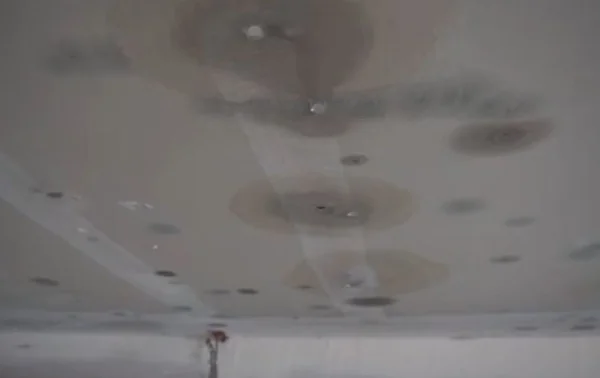
Moisture. In Inwood that usually means tide or storm water against foundations, sewer or storm drain backups on low streets, plumbing leaks, roof leaks and ice dams, or summer humidity in closed-up basements. Mold spores are everywhere; they only grow where there’s water.
How fast does mold grow after water damage?
Mold can begin growing on wet materials within 24 to 48 hours, which is why the EPA advises drying wet building materials and furnishings within that window.
Is black mold dangerous?
Color alone doesn’t tell you much. Several common indoor molds are dark. According to the CDC, mold exposure can cause a stuffy nose, sore throat, coughing, wheezing, burning eyes or a skin rash in some people, and people with asthma, mold allergies, weakened immune systems or chronic lung disease are more sensitive.
I smell mold but can’t see it. What does that mean?
A musty, earthy smell usually means mold is growing somewhere hidden: behind drywall, under flooring, inside a wall cavity or in a crawl space. The smell has a source, and finding the moisture is the first step.
Is it mold or efflorescence on my basement wall?
White, crystal-like deposits that crumble to powder are usually efflorescence, mineral salts left as water moves through masonry. Fuzzy, spreading or discolored growth is more likely mold. Either way, water is getting through the wall.
What indoor humidity prevents mold?
The EPA recommends keeping indoor humidity below 60%, ideally between 30% and 50%. A dehumidifier in the basement is one of the simplest ways to get there in humid South Shore summers.
Should I see a doctor about mold symptoms?
If you or your family have symptoms that improve when you’re away from home, talk to your doctor, and have the home checked for moisture and mold at the same time.
DIY Cleaning, Bleach & Products
Can I remove mold myself?
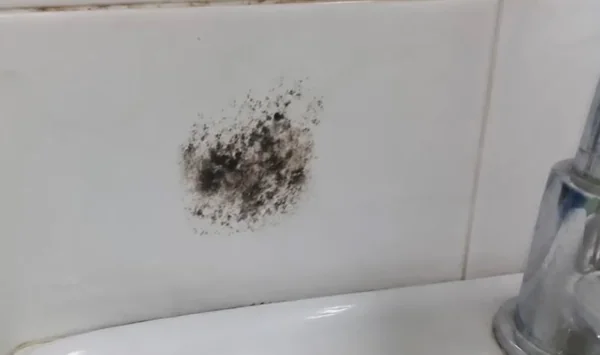
Often, yes, if the area is small (under about 10 square feet), it’s on a hard, non-porous surface like tile or glass, and you’ve fixed the moisture problem. Wear gloves, eye protection and an N95 respirator. Read can I remove mold myself before you start.
Does bleach kill mold?
Bleach can lighten and clean mold on hard, non-porous surfaces. It doesn’t fix mold that has grown into drywall, wood or insulation, and it doesn’t stop the water that caused it.
Can I mix bleach and ammonia to clean mold?
No. Never mix bleach with ammonia. The combination releases toxic fumes.
Do hydrogen peroxide or vinegar work on mold?
Many people use them on small spots on hard surfaces. The bigger question is why the mold is there. If moisture keeps coming back, so will the mold.
Can I just paint over mold?
No. Paint hides mold for a while, but growth inside drywall or wood keeps spreading and the smell comes back. Moldy porous materials usually need to be removed.
Do ozone generators get rid of mold?
The EPA advises against using ozone generators in occupied homes because ozone irritates the lungs. Ozone also doesn’t remove mold growth or fix the moisture behind it.
Are home mold test kits accurate?
Mold spores are in almost every home’s air, so a settle-plate kit that “grows mold” doesn’t tell you much. Finding visible growth, musty smells and moisture sources is more useful, and larger problems call for a licensed assessor.
The Mold Remediation Process
What are the steps of mold remediation?
Eight steps: a phone call, a visit to find the moisture source, an independent assessment and plan, containment, removal and cleaning, drying, independent clearance testing, and a plan to keep the water out. See our mold remediation process.
What is containment?
Sealing the work area with plastic sheeting and running HEPA air scrubbers to create negative air pressure, so spores stay in the work zone instead of spreading through the house.
Can I stay home during mold remediation?
For most smaller, properly contained jobs, yes. For larger projects, or if someone at home has asthma, a weakened immune system, a newborn or a pregnancy, staying elsewhere during the work can make sense.
How long does mold remediation take?
Small, contained jobs can be quick. Larger projects take longer because containment, removal, drying and clearance testing each take time, and drying can’t be rushed.
Why does mold come back after remediation?
Almost always because the moisture source wasn’t fixed, or walls were closed up before the framing was dry.
How do I know the job worked?
An independent assessor performs clearance testing after cleaning and drying and gives you written results.
New York Mold Law & Licensing
Do I need a licensed company for mold removal in New York?
If you hire someone for mold larger than 10 square feet, yes. New York Labor Law Article 32 requires a licensed Mold Assessor and a licensed Mold Remediation Contractor. Here’s how New York’s mold law works.
Can the same company test and remove mold?
Not on the same project. Under Article 32, the licensed assessor and the licensed remediation contractor must be separate companies.
Can I clean mold in my own home without a license?
Yes. New York doesn’t require homeowners to hire anyone to clean mold in their own home.
Does Nassau County have its own licensing?
Yes. Nassau County’s Department of Consumer Affairs licenses environmental hazard remediation providers and home improvement contractors. It’s fair to ask any company for their Nassau license as well as their state license.
How do I check a mold license?
The NYS Department of Labor has an online license search for mold assessors and remediation contractors. Check before you sign anything.
Cost & Insurance
How much does mold removal cost in Inwood?
It depends on the size of the area, the materials affected, where the mold is, what kind of water caused it, and whether independent assessment and clearance testing are required. Call (516) 823-2123 and we’ll explain what your situation likely involves.
Does homeowners insurance cover mold in New York?
Generally only when the mold came from a sudden, accidental event, like a burst pipe, that was reported promptly. Long-term leaks, humidity and outside flooding are generally excluded, and many policies cap mold coverage. More on homeowners insurance and mold in NY.
Does flood insurance cover mold?
Outside flooding needs a separate flood policy such as NFIP. FEMA says NFIP won’t cover mold damage if the policyholder didn’t take reasonable steps to prevent it, unless officials banned entry to the area or floodwater kept you from reaching the home.
What should I document for an insurance claim?
Photos and video before anything is moved, dates of the water event, drying records, moisture readings, and the remediation plan and clearance paperwork.
Renters, Landlords & Home Sales
My landlord won’t fix the mold. What can I do?
Put the complaint in writing, keep photos and dates, and know that New York’s warranty of habitability (Real Property Law §235-b) can’t be waived in a lease. Talk to a tenant attorney before withholding rent. See landlord mold responsibility in New York.
Who pays for mold removal in a rental?
It depends on the cause and the lease, but landlords must keep rentals fit to live in under the warranty of habitability. A tenant attorney can advise on your situation.
An inspection found mold before closing. What now?
Get the inspection report to the assessor and remediation company so the scope is clear. Independent clearance paperwork after the work is what buyers, sellers and attorneys usually want to see.
Flooding & Inwood-Specific Questions
Is Inwood, NY in a flood zone?
Parts of it are. Nassau County has named low-lying areas of Inwood, Lawrence, Cedarhurst, Hewlett, North Woodmere and Woodmere as flood-prone after major storms. Check your address on FEMA’s Flood Map Service Center and read our guide to Inwood flood zones and mold risk.
Which Inwood streets flood at high tide?
Residents along Bayswater Boulevard, Davis Avenue, Chestnut, Maple and Walnut roads and Peppe Drive have described flooding at full-moon high tides, and the Town of Hempstead has planned road raising, check valves and drainage work for the area.
Could my house still have mold from Hurricane Sandy?
It’s possible. During Sandy in 2012 the USGS gauge on Jamaica Bay at Inwood recorded a record water level above FEMA’s 100-year flood elevation. Homes that were pumped out but not professionally dried can hide damage in framing and subfloors.
What should I do after water comes in from a storm or tide?
Stay out of standing water near outlets, take photos and video, remove standing water and wet items, start drying with fans and dehumidifiers, don’t close up wet walls, and call so someone can check what’s still wet inside walls and floors.
Still Have a Question? Ask a Local.
Call and tell us what you’re seeing. If it’s a small spot, we’ll tell you how to handle it yourself. If it’s bigger, we’ll explain exactly what happens next.
Every day materials stay wet, mold can spread deeper into drywall, insulation and framing.
Call 24/7, day or night
(516) 823-2123447 Doughty Blvd, Inwood, NY 11096 · Contact@moldremovalininwood.com